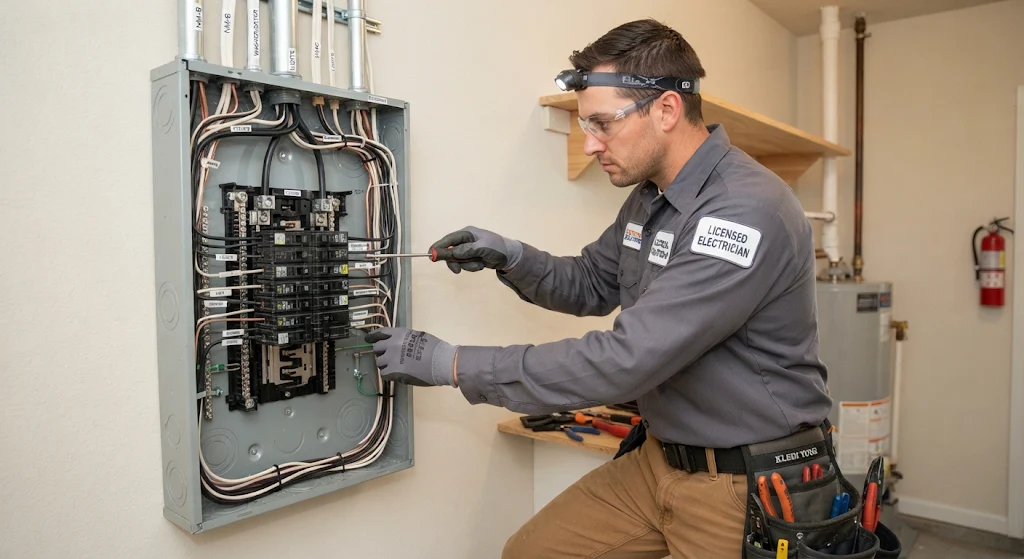
Advanced Energy Storage, Inverter Wiring & Microgrid Integration in Twin Falls
As energy costs rise and interest in power independence grows across Idaho, residential and commercial property owners in Twin Falls are pairing clean solar energy generation with advanced lithium battery energy storage systems (BESS). However, a solar and battery storage system is only as reliable and safe as its underlying electrical architecture.
Integrating solar photovoltaic arrays and high-capacity battery storage banks requires specialized electrical engineering. Licensed electricians must calculate busbar ratings under the NEC '120% rule,' install critical load backup subpanels, configure hybrid inverters, and ensure compliant utility disconnection points. WATT911 connects clients in Twin Falls and Twin Falls County with independent licensed electrical contractors specializing in the complex AC/DC electrical integration of solar and battery systems.
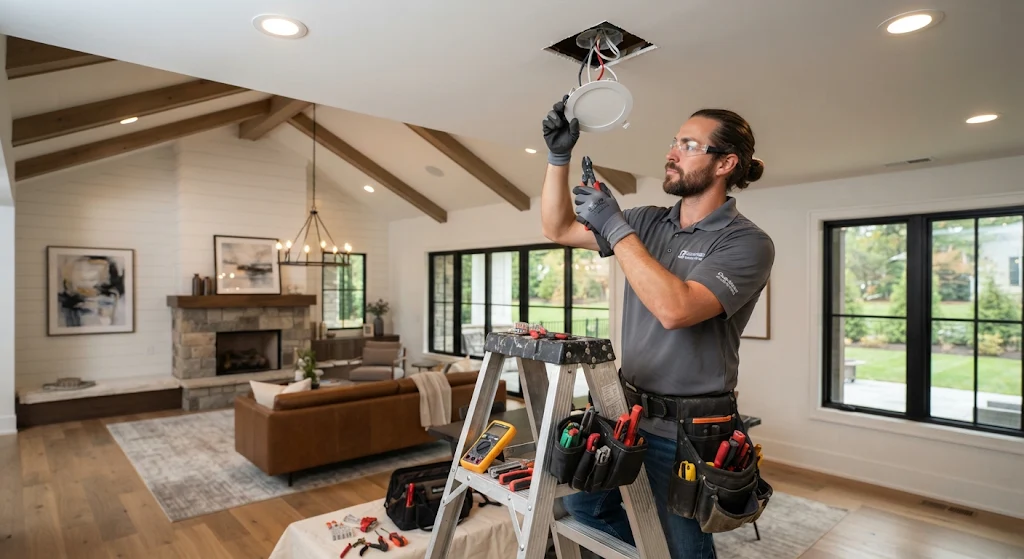
Key Electrical Components of Solar & Battery Systems
Independent electrical contractors manage the core electrical balance-of-system (BOS) components for clean energy systems in Twin Falls:
- Hybrid Inverter & DC-to-AC Conversion: Installing and wiring modern hybrid string inverters or microinverter systems that convert DC electricity generated by solar panels into stable 120/240V AC power.
- Battery Energy Storage Systems (BESS): Connecting lithium-iron-phosphate (LiFePO4) battery units (such as Tesla Powerwall, Enphase IQ, or FranklinWH) with rapid shutdown switches, overcurrent protection, and smart battery management systems.
- Critical Loads Backup Subpanel: Re-routing essential circuits—such as refrigeration, heating controls, well pumps, Wi-Fi, and medical equipment—into a dedicated backup subpanel that remains fully powered during utility grid blackouts.
- Rapid Shutdown & Utility Interconnection Compliance: Implementing NEC 690.12 rapid shutdown initiators for firefighter safety and installing exterior lockable utility disconnect switches meeting regional utility standards.
Navigating the NEC '120% Rule' & Panel Upgrades
National Electrical Code Section 705.12 dictates how much total backfed generation can be supplied to an existing electrical panel busbar without risking localized overheating. In many Twin Falls homes with 100-amp or 200-amp panels, adding solar and battery storage exceeds allowable busbar ratings. An experienced contractor resolves this by performing a 'main panel derate' (replacing the main breaker with a smaller amperage) or installing a dedicated 200A or 225A solar-ready load center.
Need Solar & Battery Electrical in Twin Falls, ID?
Speak with our referral coordination team to check availability for independent licensed electrical contractors serving Twin Falls and Twin Falls County today.
Why Choose WATT911 for Your Twin Falls Electrical Connection
When investing in Solar & Battery Electrical for your property in Twin Falls, working with a qualified professional is critical for fire safety, insurance compliance, and long-term performance. WATT911 simplifies your search by routing your inquiry directly to licensed independent electrical contractors who maintain required Idaho state licensing, active commercial insurance, and proven experience in Twin Falls and Twin Falls County.